Our website uses cookies..... but the good ones. Not the evil ones, like government spying on you, or your ex stalking you 🤍



Field of Activity
Affordable housing means Tallinn’s residents can live well without excessive economic pressure, letting them more fully participate in the life of the city.By systematically and consistently measuring affordability, policymakers can make decisions that better serve Tallinn’s residents, poor and wealthy alike.By transparently sharing responsibilities and information, Tallinn’s government, residents and private developers can work together toward a common goal.
This field contributes to a very large extent the strategic goals “Fulfilling housing,” “Home that includes the street,” “Friendly urban space,” “Kind community” and “Creative global city” and to a large extent “Healthy mobility” and “Green transformation.”
Fulling housingHome that includes the street — Affordable housing is a foundation for individual and social wellbeing beyond the four walls of a home. Affordability maintains diverse neighborhoods and prevents displacement caused by gentrification. Tallinn can become a city where neighborhood life is more secure, and comfortable, especially for people with fewer financial resources.
Friendly urban space — Affordable housing lets more people in Tallinn invest in their neighborhood’s diverse social fabric, economic growth and physical environment over multiple generations.
Kind community — Wealth inequality in Estonia is among the highest in the EU. Around 43% of Estonians currently earn less than €1,999 per month, and around 50,000 identify as lower income individuals and families. If this trend continues, more people living in Tallinn will face poverty. Affordable housing can reduce economic pressure and mitigate the effects of widening income inequality. A community that equitably shares its resources is a kind community.
Creative global city — Affordable housing serves Tallinn’s knowledge economy, because people who have transcended financial survival can focus on innovation and creativity. An affordable housing market will make Tallinn more attractive to talented workers and entrepreneurs.
Healthy mobility — Affordable housing supports a healthier mobility culture by helping people live closer to work and play, school and shopping, family and friends. More equal access to shorter commuting distances means more people, especially those with limited mobility, can live in well-connected neighborhoods.
Green transformation — A well-regulated affordable housing development steers Tallinn’s growth toward more efficient infrastructures and buildings. Making short-term energy efficiency investments and housing more attainable for Tallinn’s residents aligns with the city’s long-term strategy of climate neutrality.
Principles for implementation
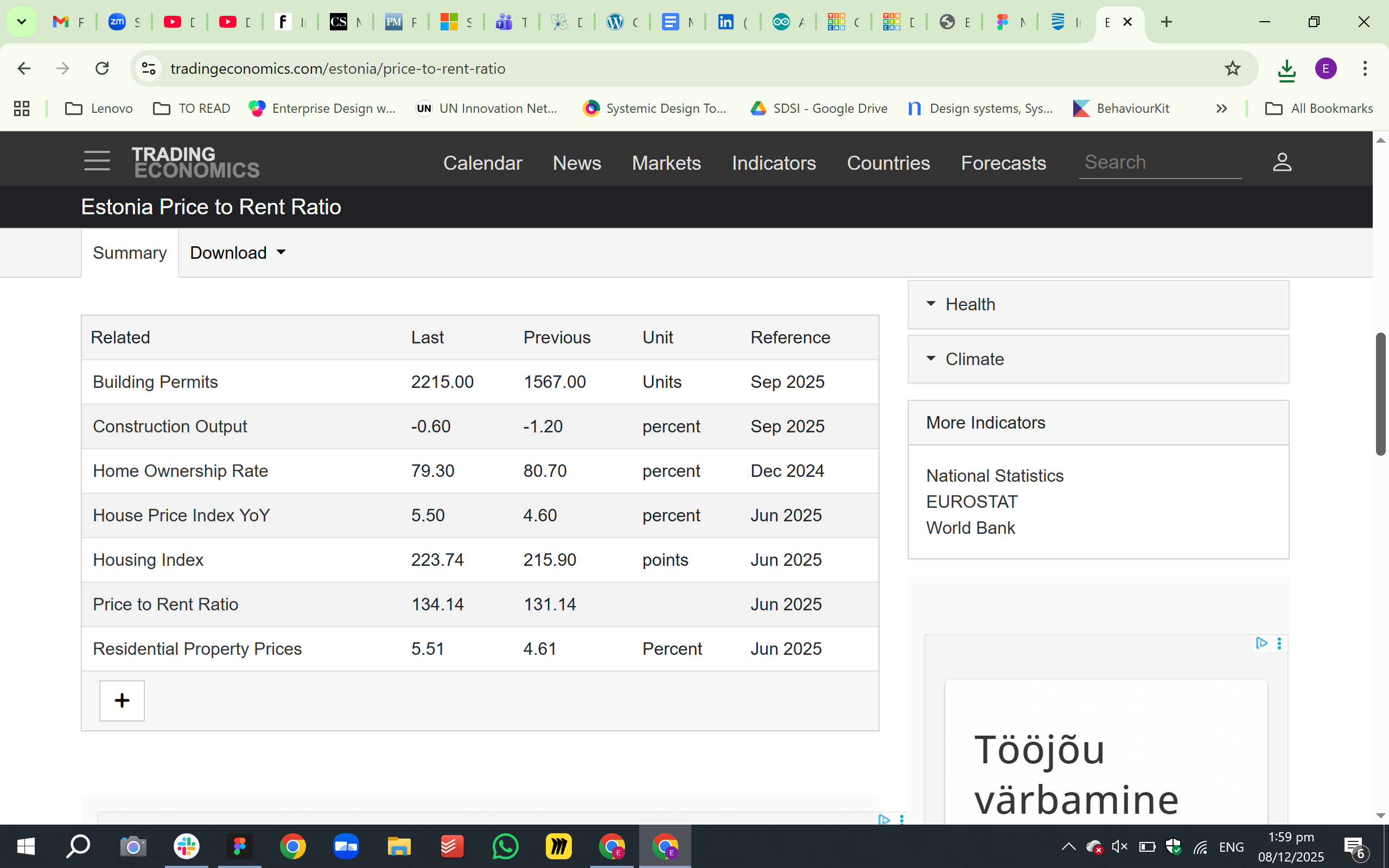
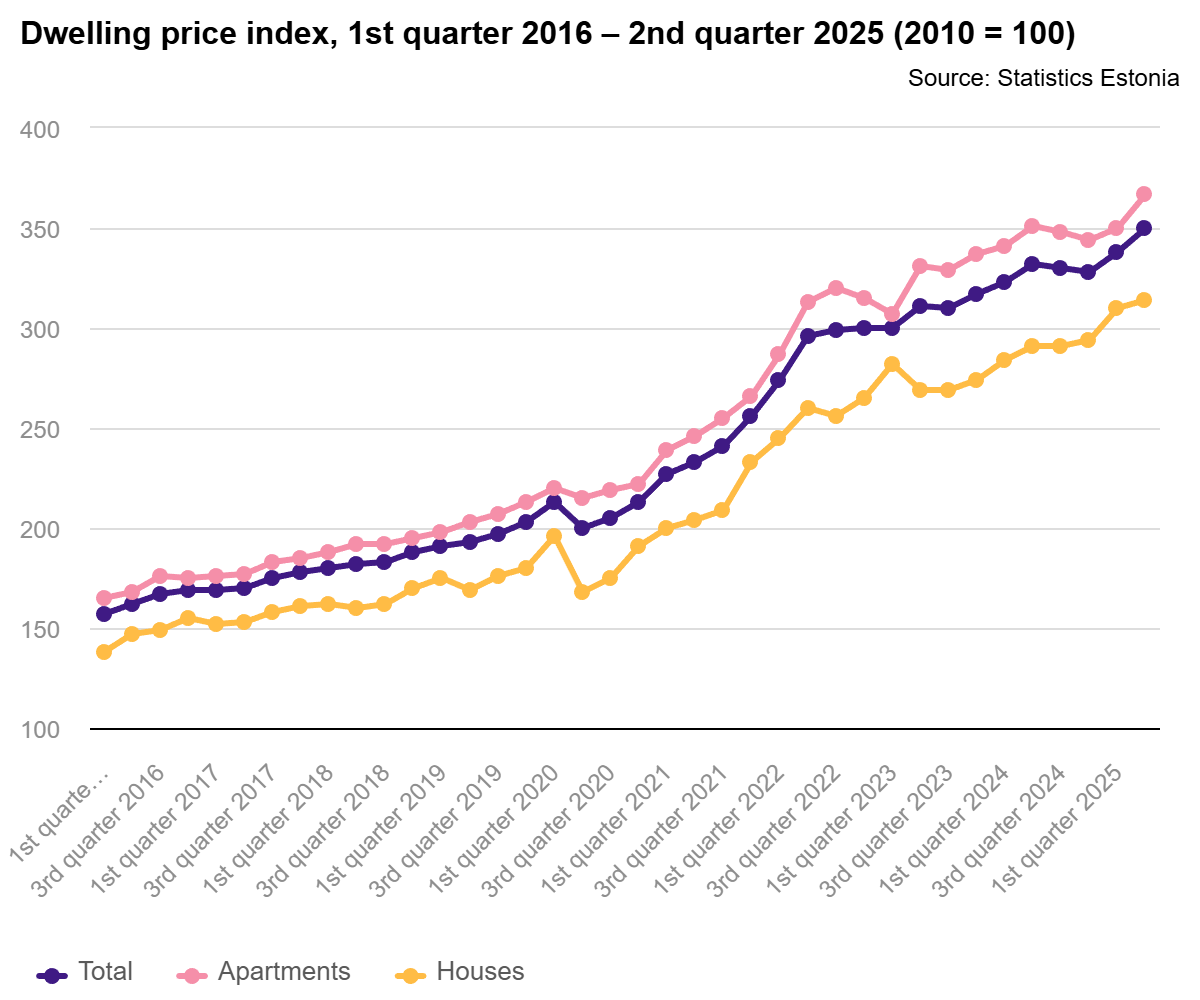
Transparent housing system. Information related to housing affordability is openly available and easy to understand. Residents, developers and the city operate with the same understanding of affordability and eligibility. This strengthens trust between private and public. A clear public overview of affordability trends reduces uncertainty and supports long-term decision-making.
Source: tradingeconomics.com/estonia
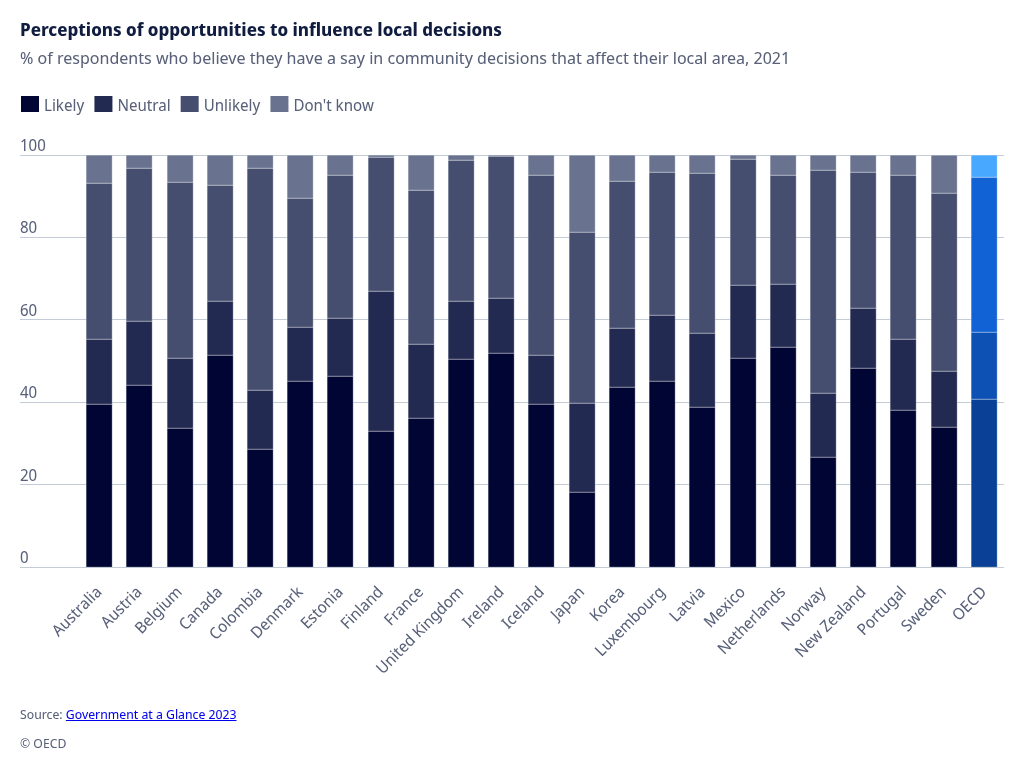
Participatory development. Residents, communities, experts and private-sector partners are meaningfully involved in the whole process of shaping affordability policies. More participation supports housing priorities that reflect lived realities and decisions that consider the needs of diverse groups. A participatory approach also strengthens accountability and legitimacy.
Measurable affordability standards. Affordability is defined through indicators that reflect actual household conditions. Measuring affordability clarifies the objectives of this field, and shared principles of measurement help stakeholders, including the city government, private developers and service providers, align on the same goals. Unified standards prevent parallel or conflicting interpretations of affordability and support evidence-based decisions, long-term planning and coordinated action across departments.
Accountable implementation. Responsibility for achieving housing affordability is evenly distributed among city departments, public institutions and private developers. Each actor understands their role in meeting the city’s long-term goals. Reporting mechanisms, monitoring practices and follow-up procedures ensure that agreed actions are carried out and that progress is visible. A culture of responsibility supports continuity and reduces fragmentation in housing policy.
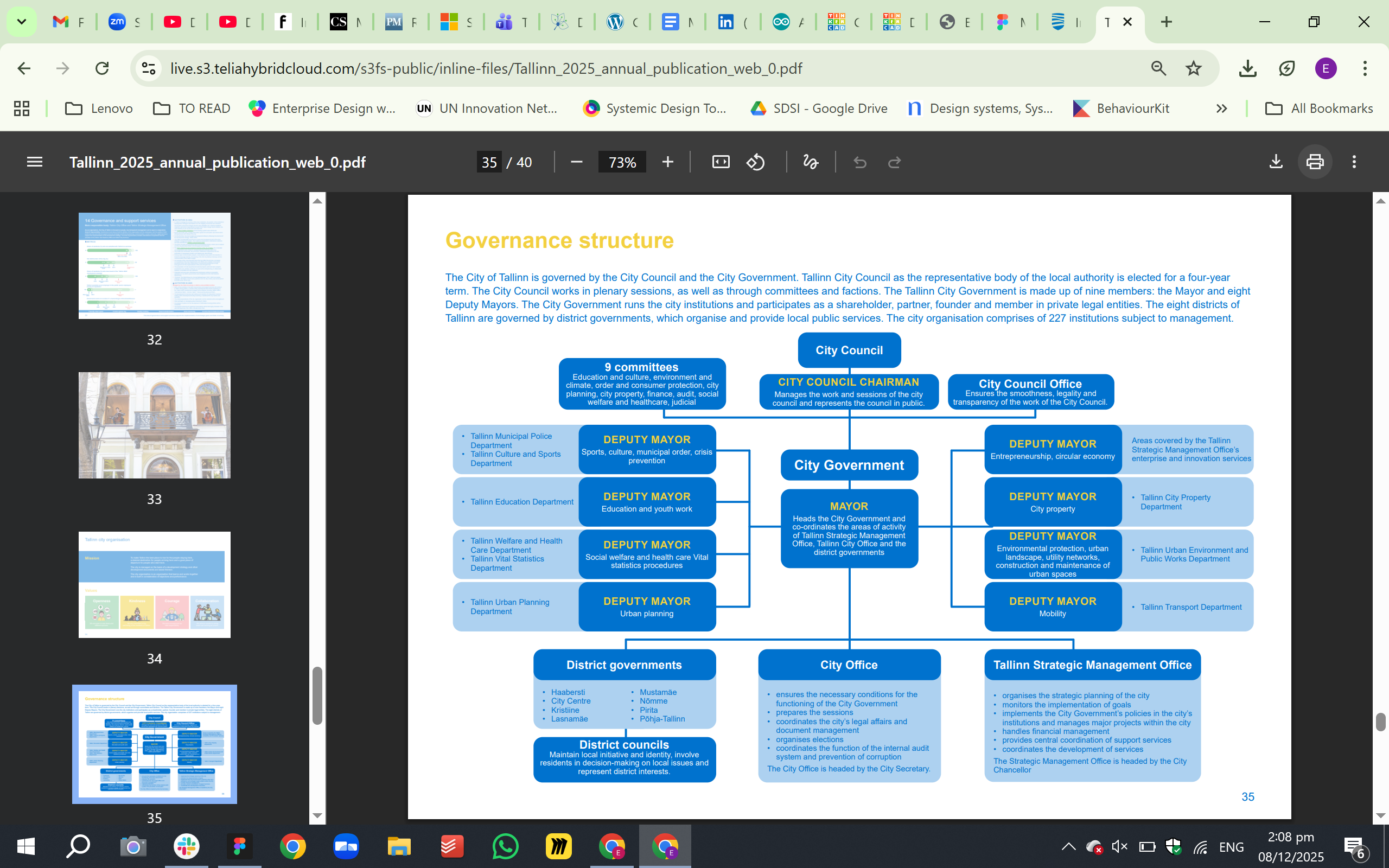
Source: Tallinn 2025 Annual Publication
Context-sensitive solutions. Housing decisions take into account the diversity of Tallinn’s neighborhoods, residents’ different life stages and household types and local economic conditions. Policies and interventions are adapted to the specific needs of places and communities. A context-sensitive approach contributes to a balanced and inclusive urban development.
Goals of the field
- Expanded legal definition and measures for affordable housing
Affordable housing is defined and made explicit in Estonian legislation, along with measures to determine the level of housing affordability. These measures are supported by a combination of quantitative and qualitative data that reflects both the wider market conditions and the lived experiences of Tallinn’s residents.
INDICATORS
- Share of citizens who know the legal definition of affordable housing.
Starting level: The indicator will be developed in 2026.
Target level: Will be set after the starting level has been determined.
- Data collection and synthesis from human-focused, needs-based services.
Starting level: The indicator will be developed in 2026.
Target level: Will be set after the starting level has been determined.
- More residents have homes without financial burden
Home ownership is a right for every Tallinn resident. Residents are not burdened with costs greater than 40% of their disposable income. Public and private stakeholders collaboratively fund and develop existing and upcoming housing projects through action programs such as public-private partnerships.
INDICATORS
- Share of residents who are able to afford to rent or buy a home while still maintaining 60% of their disposable income.
Starting level: The indicator will be developed in 2026.
Target level: Will be set after the starting level has been determined.
Action Programs
- Expanded legal definition and measures for affordable housing
Expanded definitions and criteria for affordable housing upholds an enforceability baseline. This baseline gives policy makers, property developers and residents a single source of truth for affordable and accessible homes in Tallinn. An expanded definition and criteria makes development permitting more efficient.
Key courses of action:
- Create competence centers for housing affordability.
- Collate measures for housing affordability from Statistics Estonia into its own separate theme.
- Prepare affordable-housing development strategies, considering measures for affordable housing along with support mechanisms like public-private partnerships and participatory platforms for housing regulations.
- Organize and prepare economic and socioeconomic research, analyses, measurements, and projects to identify Tallinn’s affordable-housing needs.
- Prepare guidelines on affordable housing.
- Public-private partnership for co-developing and co-financing housing
Public-private partnerships (PPPs) let both city government and private property developers more quickly and efficiently process building permits, develop housing infrastructure aligned with Tallinn’s strategic goals and reduce risk for all parties.
Key courses of action:
- Create competence centers for affordable housing PPPs.
- Prepare affordable housing PPP strategies, considering appropriate legal structures required for specific PPP models.
- Organize and prepare economic and socioeconomic research, preference and other surveys, analyses, measurements and projects to identify Tallinn’s affordable-housing needs.
- Prepare legal structures to support specific PPP models.
- Participatory platform for policymaking on housing regulations.
With a dedicated participatory platform for end-to-end policymaking for affordable housing, the measures and actions taken by the city government and property developers become more transparent and explicable. This, in turn, demonstrates to developers the ease of building affordable-housing properties in Tallinn because of the available co-financing mechanisms and legal structures.
Key courses of action:
- Create competence centers for participatory policy-making.
- Prepare the participatory policy-making platform and related channels.
- Organize and prepare economic and socioeconomic research, preference and other surveys, analyses, measurements and projects to identify potential participants, channels and formats for the platform.
- Prepare legal structures to support the participatory process.
Affordable housing
Our website uses cookies..... but the good ones. Not the evil ones, like government spying on you, or your ex stalking you 🤍

Field of Activity
Affordable housing means Tallinn’s residents can live well without excessive economic pressure, letting them more fully participate in the life of the city.By systematically and consistently measuring affordability, policymakers can make decisions that better serve Tallinn’s residents, poor and wealthy alike.By transparently sharing responsibilities and information, Tallinn’s government, residents and private developers can work together toward a common goal.
This field contributes to a very large extent the strategic goals “Fulfilling housing,” “Home that includes the street,” “Friendly urban space,” “Kind community” and “Creative global city” and to a large extent “Healthy mobility” and “Green transformation.”
Fulling housingHome that includes the street — Affordable housing is a foundation for individual and social wellbeing beyond the four walls of a home. Affordability maintains diverse neighborhoods and prevents displacement caused by gentrification. Tallinn can become a city where neighborhood life is more secure, and comfortable, especially for people with fewer financial resources.
Friendly urban space — Affordable housing lets more people in Tallinn invest in their neighborhood’s diverse social fabric, economic growth and physical environment over multiple generations.
Kind community — Wealth inequality in Estonia is among the highest in the EU. Around 43% of Estonians currently earn less than €1,999 per month, and around 50,000 identify as lower income individuals and families. If this trend continues, more people living in Tallinn will face poverty. Affordable housing can reduce economic pressure and mitigate the effects of widening income inequality. A community that equitably shares its resources is a kind community.
Creative global city — Affordable housing serves Tallinn’s knowledge economy, because people who have transcended financial survival can focus on innovation and creativity. An affordable housing market will make Tallinn more attractive to talented workers and entrepreneurs.
Healthy mobility — Affordable housing supports a healthier mobility culture by helping people live closer to work and play, school and shopping, family and friends. More equal access to shorter commuting distances means more people, especially those with limited mobility, can live in well-connected neighborhoods.
Green transformation — A well-regulated affordable housing development steers Tallinn’s growth toward more efficient infrastructures and buildings. Making short-term energy efficiency investments and housing more attainable for Tallinn’s residents aligns with the city’s long-term strategy of climate neutrality.
Principles for implementation
Transparent housing system. Information related to housing affordability is openly available and easy to understand. Residents, developers and the city operate with the same understanding of affordability and eligibility. This strengthens trust between private and public. A clear public overview of affordability trends reduces uncertainty and supports long-term decision-making.
Source: tradingeconomics.com/estonia
Participatory development. Residents, communities, experts and private-sector partners are meaningfully involved in the whole process of shaping affordability policies. More participation supports housing priorities that reflect lived realities and decisions that consider the needs of diverse groups. A participatory approach also strengthens accountability and legitimacy.
Measurable affordability standards. Affordability is defined through indicators that reflect actual household conditions. Measuring affordability clarifies the objectives of this field, and shared principles of measurement help stakeholders, including the city government, private developers and service providers, align on the same goals. Unified standards prevent parallel or conflicting interpretations of affordability and support evidence-based decisions, long-term planning and coordinated action across departments.
Accountable implementation. Responsibility for achieving housing affordability is evenly distributed among city departments, public institutions and private developers. Each actor understands their role in meeting the city’s long-term goals. Reporting mechanisms, monitoring practices and follow-up procedures ensure that agreed actions are carried out and that progress is visible. A culture of responsibility supports continuity and reduces fragmentation in housing policy.
Source: Tallinn 2025 Annual Publication
Context-sensitive solutions. Housing decisions take into account the diversity of Tallinn’s neighborhoods, residents’ different life stages and household types and local economic conditions. Policies and interventions are adapted to the specific needs of places and communities. A context-sensitive approach contributes to a balanced and inclusive urban development.
Goals of the field
- Expanded legal definition and measures for affordable housing
Affordable housing is defined and made explicit in Estonian legislation, along with measures to determine the level of housing affordability. These measures are supported by a combination of quantitative and qualitative data that reflects both the wider market conditions and the lived experiences of Tallinn’s residents.
INDICATORS
- Share of citizens who know the legal definition of affordable housing.
Starting level: The indicator will be developed in 2026.
Target level: Will be set after the starting level has been determined.
- Data collection and synthesis from human-focused, needs-based services.
Starting level: The indicator will be developed in 2026.
Target level: Will be set after the starting level has been determined.
- More residents have homes without financial burden
Home ownership is a right for every Tallinn resident. Residents are not burdened with costs greater than 40% of their disposable income. Public and private stakeholders collaboratively fund and develop existing and upcoming housing projects through action programs such as public-private partnerships.
INDICATORS
- Share of residents who are able to afford to rent or buy a home while still maintaining 60% of their disposable income.
Starting level: The indicator will be developed in 2026.
Target level: Will be set after the starting level has been determined.
Action Programs
- Expanded legal definition and measures for affordable housing
Expanded definitions and criteria for affordable housing upholds an enforceability baseline. This baseline gives policy makers, property developers and residents a single source of truth for affordable and accessible homes in Tallinn. An expanded definition and criteria makes development permitting more efficient.
Key courses of action:
- Create competence centers for housing affordability.
- Collate measures for housing affordability from Statistics Estonia into its own separate theme.
- Prepare affordable-housing development strategies, considering measures for affordable housing along with support mechanisms like public-private partnerships and participatory platforms for housing regulations.
- Organize and prepare economic and socioeconomic research, analyses, measurements, and projects to identify Tallinn’s affordable-housing needs.
- Prepare guidelines on affordable housing.
- Public-private partnership for co-developing and co-financing housing
Public-private partnerships (PPPs) let both city government and private property developers more quickly and efficiently process building permits, develop housing infrastructure aligned with Tallinn’s strategic goals and reduce risk for all parties.
Key courses of action:
- Create competence centers for affordable housing PPPs.
- Prepare affordable housing PPP strategies, considering appropriate legal structures required for specific PPP models.
- Organize and prepare economic and socioeconomic research, preference and other surveys, analyses, measurements and projects to identify Tallinn’s affordable-housing needs.
- Prepare legal structures to support specific PPP models.
- Participatory platform for policymaking on housing regulations.
With a dedicated participatory platform for end-to-end policymaking for affordable housing, the measures and actions taken by the city government and property developers become more transparent and explicable. This, in turn, demonstrates to developers the ease of building affordable-housing properties in Tallinn because of the available co-financing mechanisms and legal structures.
Key courses of action:
- Create competence centers for participatory policy-making.
- Prepare the participatory policy-making platform and related channels.
- Organize and prepare economic and socioeconomic research, preference and other surveys, analyses, measurements and projects to identify potential participants, channels and formats for the platform.
- Prepare legal structures to support the participatory process.
Affordable housing